4.9 1890+ Google Reviews
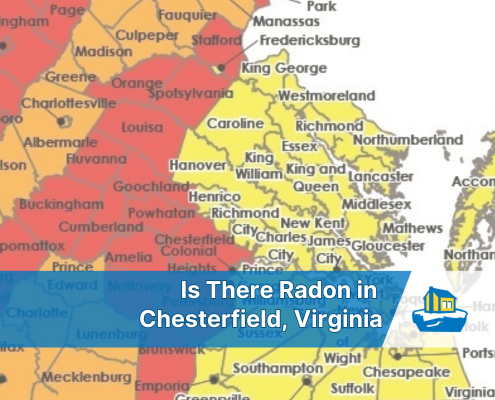
This guide breaks down everything you need to know about radon gas in Chesterfield, VA—from local risk levels to testing, fluctuations, and mitigation.
When it comes to testing indoor radon levels, you can either test them yourself or hire a professional. Obviously, hiring a professional is the easiest and most reliable, but also the most expensive.
Fortunately, there is a brilliant and passionate radon tester here in Chesterfield, va. Wally Dorsey with Radon Ease can tackle all of your radon testing needs.
An important aspect of radon levels is that they fluctuate. In fact, they fluctuate hourly, monthly, and seasonally. For example, winter months generally produce higher indoor radon levels. Likewise, longer tests convey a more accurate picture of your average radon level. That is why a continuous radon monitor is the best option for homeowners.
Use these as your checklist:
For a 90-day continuous test with an EcoQube, the best approach is:
One important nuance: EPA’s strict “closed-building conditions” language applies to tests lasting up to 90 days, whereas long-term home monitoring is most valuable for capturing normal fluctuations over time. So for your practical use, I’d keep the house as normal as possible, but not unusually ventilated. That gives you the most useful real-world number.
EPA’s action level is 4.0 pCi/L. EPA says if a long-term test result is 4.0 pCi/L or higher, the home should be fixed.
Here’s how to interpret your results:
Here in Chesterfield, about 1 in 4 tested homes have high levels of radon. If you're in that 25%, then you'll need professional radon mitigation. Look for an NRSB or NRPP-certified radon mitigation specialist. Ensure they have a strong reputation in the community. It's worth giving Commonwealth Environmental a call here in Richmond.
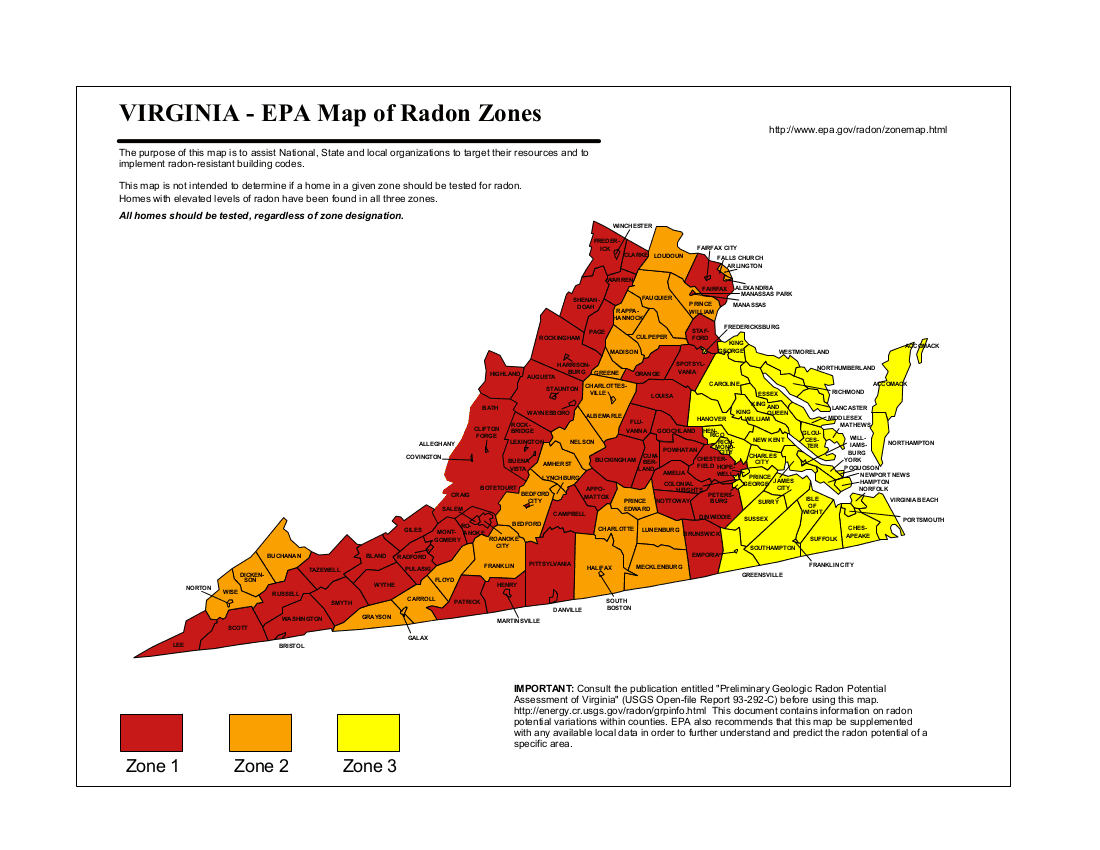
Chesterfield County is classified as an EPA Zone 1 area, meaning it has the highest potential for elevated radon levels (above 4.0 pCi/L).
Additionally, Central Virginia—including Chesterfield—has been identified as a region with elevated radon risk due to underlying geology.
That means Chesterfield homes often sit right on the edge of concern, and many homes exceed safe levels.
Radon is a naturally occurring radioactive gas that forms when uranium in soil breaks down. It rises through the ground and can enter homes through:
Since it's a naturally occurring gas, it is found everywhere, including in outdoor air. However, it's the radon concentrations inside our homes that can pose serious health risks. Once inside, it can build up—especially in basements and lower levels.
In fact, Radon is the second leading cause of lung cancer in the U.S., making it a serious concern for homeowners.
One of the biggest misconceptions about Radon is that it's static. It's not.
Radon levels can change based on:
Radon originates from the ground, so even small differences in soil composition can dramatically impact levels.
👉 Bottom line: A single short-term test gives you a snapshot—not the full picture.
Chesterfield is in an EPA Zone 1, meaning there's a high risk of homes having too much radon. The only way to know is to test. Radon is the second leading cause of lung cancer.